Proof · From my own file
One of my own investments, under the microscope.
Every operator in this industry asks you to take their judgement on faith. I’d rather open one of my own acquisitions and let you check the working: two homes on one title, built at a distance, held through construction, a rate-rise cycle and a full tenancy history, then sold. The numbers are on the table and the mistakes are left in.
The deal
Two self-contained homes on one title, built new in another state, commissioned and completed entirely remotely. Construction ran December 2022 to June 2023. I never once visited during the build. Both dwellings produced income from completion, and the property sold in 2026 for $1,010,000.
Being precise about what this was, because the words matter. In Western Australian terms this was a main dwelling with an ancillary dwelling alongside it. In Queensland planning language that is a secondary dwelling, not a dual occupancy: the second home is subordinate to the first, the two share one title, and they cannot be separated. It is one of the configurations I work with, and often the right one — it is simpler and cheaper to deliver than a duplex built for two titles. But it is not a dual occupancy, and I am not going to call it one to make the story neater. Which configuration suits you is the question Stage 1 answers, not something decided before we start.
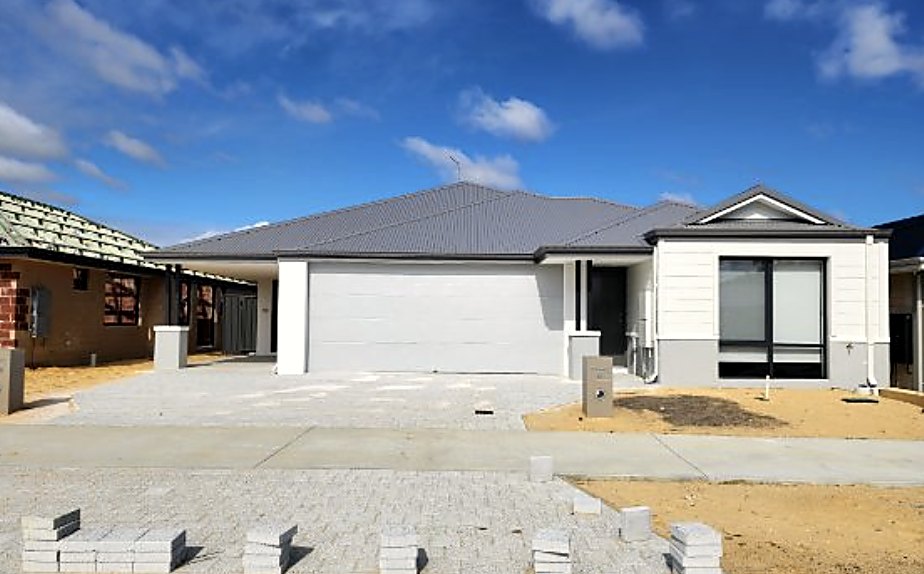
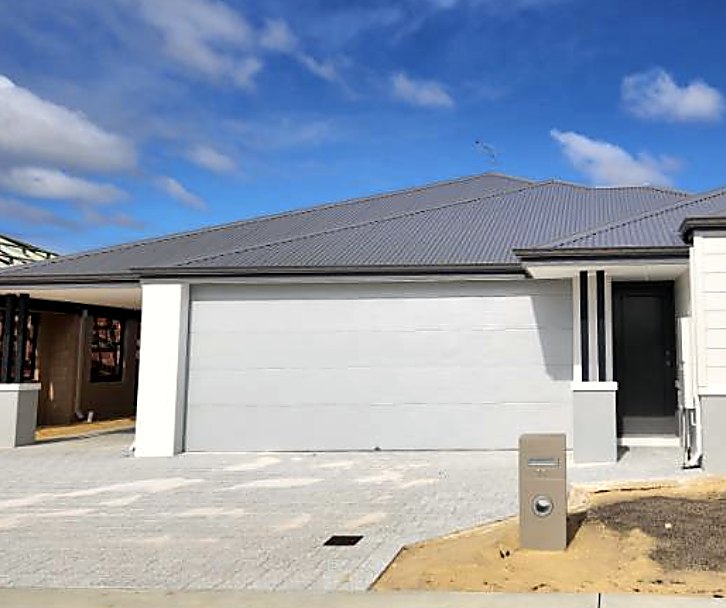
What it does prove is the part that transfers. Two dwellings, two tenancies, one block, built from a slab by a volume builder, run entirely at a distance by an owner with nobody in her corner. Every discipline on this website came out of that build, and the difference between what I had then and what a client gets now is the whole reason the business exists.
| Item | Amount |
|---|---|
| Land purchase price, 2022 | $204,000 |
| Fixed-price building contract (standard form, GST inclusive) | $436,281 |
| Combined land and construction | $640,281 |
| Capital works entitlement (Division 43, the structure)1 | $382,575 |
| Plant & equipment entitlement (Division 40)2 | $48,269 |
| Depreciation deductions available, first full year3 | $21,930 |
| Total depreciation entitlements across the schedule | $430,844 |
| Combined rental income, both dwellings | $1,045 / week |
| Annualised | $54,340 |
| Gross yield on land and construction4 | 8.5% |
| Sale price, 2026 | $1,010,000 |
| Uplift over land and construction (before duty, holding and selling costs)5 | $369,719 |
Notes to the figures
- 1Division 43, the structure itself. Walls, slab, roof, everything that can’t be unscrewed. Claimed at 2.5% a year for forty years, roughly $9,564 every year like clockwork. The part marketers leave out: the capital works portion reduces your cost base, so part of it is generally brought back at sale through capital gains tax. I’ve published the full account of my schedule, including that bill.
- 2Division 40, the things that wear out. Carpets, blinds, appliances and hot water depreciate fast, front-loading deductions into the early years. Since the 2017 rules, buyers of established homes generally cannot claim the plant and equipment they inherit; this figure exists because the build was new.
- 3A non-cash deduction. I spent nothing that year to claim it; the outlay was in the build. On a typical marginal tax rate, that first-year figure returned several thousand dollars in reduced tax, at the point a new investment is tightest. It fades as Division 40 exhausts, which is why I model it fading rather than flat.
- 4Uplift is not profit. Stamp duty, loan interest, insurance, rates and selling costs all sat inside that figure. I won’t publish a “profit” I can’t document line by line. This is the number the documents themselves support, labelled with what it excludes.
Taken together, those figures show a sale that realised roughly $370,000 above the combined land and construction cost (before duty, holding and selling costs) over roughly three and a half years from land purchase to sale. The depreciation was real and claimable from the first full year, and $1,045 a week across two dwellings (better than a 5% gross yield on the eventual sale price) stayed ahead of the interest bill through a rate-rise cycle that hurt plenty of single-income holdings.
What the numbers don’t show
I ran that build with a broker in my corner and nobody else. There was no one whose job it was to read the land, interrogate the contract or hold the builder to account, and the distance created small oversights with large consequences. The two dwellings were poured on a single continuous slab. An ancillary dwelling is subordinate by definition and has to stay on the one lot with the main house, so that property was never going to be split into two titles. That is not the lesson, and I want to be fair about it. An ancillary dwelling is the right answer when borrowing capacity is the binding constraint, which it was. It costs less to build, the approval is easier, the infrastructure charge is usually lower or nil, and it still produces a second income. Nobody put us in the wrong product. We were given the right product for the money that was available. The lesson is that nobody showed us the other game, or what it would have taken to play it. I did not know two titles were a thing worth designing for, so I never went looking for a block that could carry them. I chose the lot, then the design, then found the ceiling. Had I understood it at the start, I would have known what a subdividable block costs, how much further the borrowing would have needed to stretch, and whether that was even reachable. It might not have been. But it would have been a decision rather than an omission. That is the sequence I now run in reverse for clients. The exit question gets asked before the entry decision, because by the time you are choosing floor plans, the expensive part has already been decided. A two-dwelling property was handed over with a single NBN connection. None of it was fatal. All of it was preventable, and nobody in that transaction was paid to prevent it.
The deal made money. The lessons built the practice.
The disciplines my clients now get (the written confirmations, the contract read before signing, the specifications fixed at the first drawing, the build claims verified before payment) exist because I ran a deal without them and carried the cost of their absence.
Why I publish my own numbers
Because I ask clients to pay for judgement, and judgement should come with receipts. This page is the standard of documentation your own acquisition gets: a real schedule from a registered quantity surveyor, real contract figures, and the full reasoning behind every decision, including the ones I would make differently now.
I learned these numbers after the build. My clients see theirs before a dollar moves.
Book your First ConversationThese figures relate to one property, purchased and sold by the author, and are provided as a factual account, not as a projection, promise or indication of typical results. Property outcomes vary with market, location, structure and timing. Depreciation figures are from a Capital Allowance and Tax Depreciation Report prepared by a registered quantity surveyor. General information only, not financial, taxation or legal advice; obtain your own independent advice before any investment decision.